Can we hug?

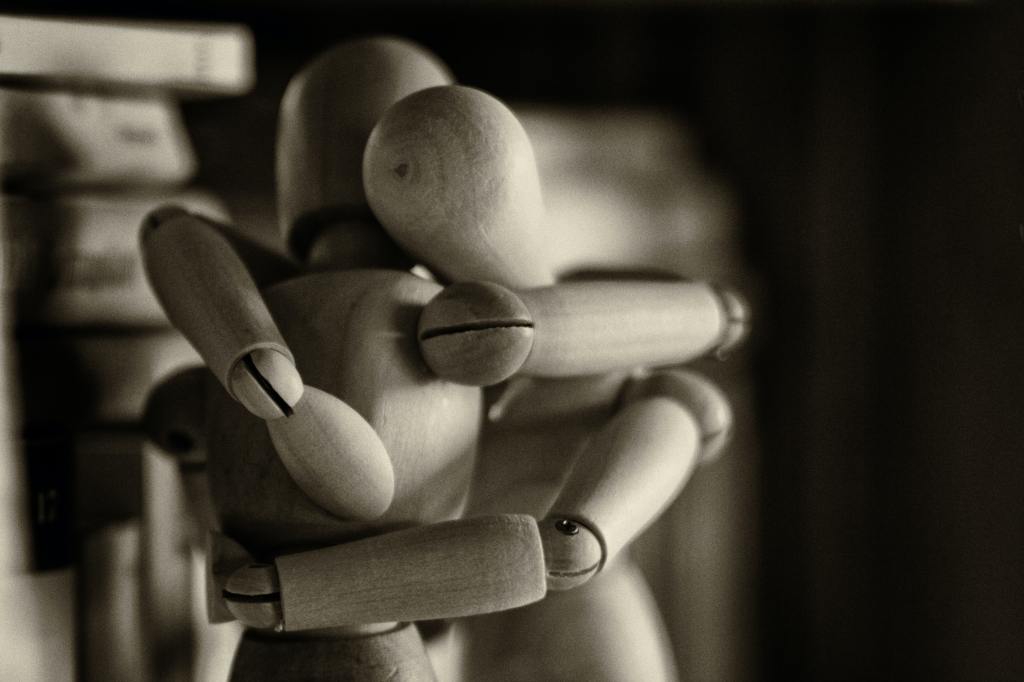
One of things I’ve really missed about lockdown and social distancing is being able to hug. I’m a hugger. I’m not one of those people who forces myself on work colleagues (I know all about boundaries, folks!) or squashes my ample self onto strangers, but nonetheless, I appreciate the value of a well placed embrace. I’ve been told that I give good hugs, that my hugs could even be considered my superpower. With some studies proving that hugs can prevent us from getting ill, it’s a shame that we’re having to be less tactile at a time when we so need a boost in wellbeing.

Another reason I’m struggling with a reduction in physical touch is that it’s one of the ways I love to communicate. As well as being a hugger, I’m also a toucher (sounds gross, so let me explain). Depending on what mood I’m in, I can find it difficult to express myself verbally. I’m pretty good at writing my thoughts down, but I’m not always that confident in speaking to strangers. I can deliver presentations, facilitate meetings, direct action and even butt in on dodgy conversations, but on a one to one, sometimes I stutter. I am at my least articulate when having a coffee with a friend. I’m one of those people who doesn’t mind long silences and could quite happily eat my lunch quietly with the occasional word.

Some of you reading this will be thinking ‘Really, Liz? You always make conversation – you’re never quiet!’ A-ha, that’s because I work really hard at it, but it doesn’t come naturally. Ask Husband Bruce and he will tell you – we can sit in silence for ages at home* and yet our communication is still on point** What makes most of my relationships work in my ability to touch people (still sounds wrong but stay with me). I like shaking hands when I meet people. Not because it’s the social convention, but because I like to exchange some warmth – it feels good to touch someone’s hand, to make that connection, which to me says, ‘I’m ready to engage with you’. In moments when I’m struggling with anxiety (which often manifests in me finding it hard to summon words from my memory banks), I can move forward by placing a hand around someone’s shoulder, or a hand on their arm. I like putting my arms around someone. It enables us both to relax – I get to give support, they get to feel supported, we share a moment of understanding. Even sitting close can do this, as can a hand on a knee (use your intuition and only touch people who have given you consent! I don’t want you to have this image of me going round feeling people up!) You know who your people are and when proximity and touch is welcome and appropriate.

A quick note: I never hug other people’s children, unless they initiate it. I’ve been really clear with my own son that he does not have to hug family members, friends or strangers unless he wants to. I’m teaching him that his body is his own, that he has a right to decide who engages with it, and that he needs to trust his own feelings of discomfort. Hi-fives are good enough.

I remember having a debate with some colleagues when I was working in mental health about whether we should hug clients. Most therapists would say no, as (1) it can appear unprofessional and cross a boundary (2) can signal a different type of relationship between the therapist and client and create an emotional attachment (3) can be misinterpreted and open the door for complaints (4) can trigger traumatic episodes. Having said that, loads of clients would attempt hugs, and in my role as support worker, some clients would naturally hug me at the end of sessions or as a way of expressing gratitude. Working with mainly black women, there were also some cultural norms to navigate and not hugging often created more issues than just having the damn hug! Along with colleagues, I determined that I would hug (1) at the end of sessions where the client initiated it and it was part of a goodbye (2) if the client asked for it and they were in operating from a position of strength (3) it was brief. I have to say, there were occasions when I wanted to hug clients because my social self kicked-in in response to their despair, and I moved toward that nurturing parent described in Transactional Analysis model. Sometimes I gave in to this, though I mainly tried to resist and redirect my energy to building their resilience instead of plugging a gap. As a hugger, who believes more hugs would make the world a better place, this has been tricky for me to navigate. In my new job at the NHS, I feel as though people don’t really know the real me – I haven’t shaken hands, touched a shoulder, given a quickie hug or a single fist bump since joining 3 months ago. This is a seriously stripped down version of Liz, and I feel they’re being short changed.

And now, I’m here sat at my keyboard, planning various Zoom encounters, nervous about these interactions devoid of touch. It’s like I don’t quite know how to start. I’ve told a few people that I’m hugging them from afar, but it’s not quite the same. It could be 6 months until we’re allowed (and feel confident enough) to hug again. Maybe I’ll just save them all up. If you’re one of my friends, prepare to get squished once this is all over.

*Though in this season, we’ve been known to engage in some rants worthy of a stadium audience.

**Physical touch is a love language for both of us. I’m lucky to have every touchy, feely inch of him.

Photo by Marco Bianchetti
On grieving…

For many, the lifting of certain lockdown restrictions has meant a return to semi normality, and the conversation has shifted in the direction of equality and the battle for civil rights. Everyone seems to be talking about Black Lives Matter.

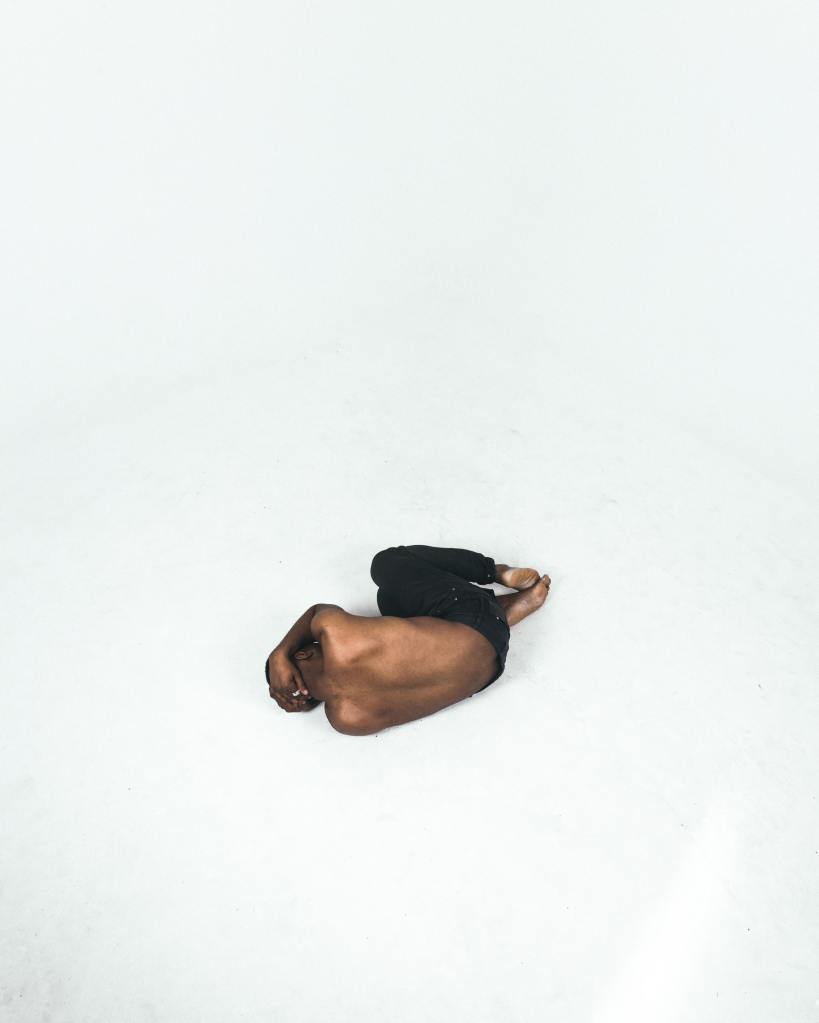
Equally true is that for those of us who are black, this is not new. I’ve been outraged hurt upset speechless numbed by the death of George Floyd; in mid conversation, I’ve found myself scratching my head (literally) and turning away from people, unable to make eye contact. After that sick footage emerged, I spent a few days alone in my bedroom/study, jotting down thoughts, trying to draw, reading psalms and searching for playlists, all in an attempt to relieve the heaviness, to lift a heart that had run out of ways to beat its way through such turmoil. Because George’s life, though far away from mine, was important to me. I hope it isn’t shallow to think of him as a brother, but as someone with four brothers, black men who have been harassed, bullied, overlooked, misunderstood, stereotyped, reduced, neglected and abused, I took it really personally, and started to grieve in spite of efforts to pull myself together and file it away as just another cruel episode in the shared story that is racism.

The grieving has been strange. For one I am doing it from afar. I didn’t know George. I won’t miss seeing his face, or feel the pain of his absence. And yet, I feel so sorry that he has lost his place in this world. His life, though a catalyst for world-wide action and awakening, deserved to be lived full, deserved to be rich and meaningful, deserved to be…long. It’s incredibly sad that so many black people live with the sense that their lives could be snuffed out for the smallest of missteps.  This is where anxiety comes in to rob everyday moments of their joy.

I write this as I read the news that there has been an attack in Reading, UK with three innocent victims. My stomach just flipped. I immediately think of those families who are about to be devastated. Three lives cut short because of someone’s perverse political agenda. I can’t cope with all this hate. There is no snappy ending to this post, no way to neatly wrap up these thoughts. Can we perhaps take a moment to think of these victims, along with all other victims of terrorist attacks, to think of the families suffering and those about to enter this horrid sentence? There is nothing else to do but lean in.

Photo by Mwangi Gatheca

Stunned silence

(Trigger Warning: suicide) 

I’ll never forget watching scenes of the terrorist attacks on 11th September 2001. I was at a church conference and it was break time. Delegates were stood around watching the news on a large screen, frozen in horror as we witnessed the second plane hit the towers. There was something distinctly surreal about seeing something so horrific unfold, and a debilitating sense of powerlessness that rendered us all silent. I think there may have been prayers later, along with chatter and theorizing about how the west would respond. George Bush would be having discussions with his war cabinet no doubt, but I remember feeling worried about my neighbours; this was in Bradford, a multicultural city with a high Pakistani Muslim population, and despite it’s open and welcoming vibe, I was fearful that fringe racist elements would see this as an opportunity to exercise some vigilantism.

For days and weeks after the attacks, I had nightmares, sometimes as I was just dropping off to sleep. Feeling like I was falling, flashbacks to the images of men and women jumping to their deaths to escape the flames. Such experiences are normal in the face of trauma, and victims of trauma are often triggered by other people’s pain. It’s hardly surprising, then, that I have been having similar dreams again recently. Hearing almost daily reports of Covid-19 deaths has taken its toll on me, challenging my usually positive mindset and undermining my go-to rituals  and mantras – nothing seems to work, at least not in the same way. I find myself pinned to the news, sometimes switching stations to get a new nugget or perspective – there is none – and despite my anxiety rising, I can’t look away.

It’s weird to be tiptoeing along, part of an insecure (socially-distanced) huddle where no-one appears to have any clear sense of the boundaries, no firm game plan in mind. There is the mask thing, which I think is supposed to stop you passing the disease on, but doesn’t necessarily stop you catching it. The enhanced version is personal protective equipment (PPE), which some high-risk staff now have, but several months too late for many, who have either passed the virus onto their friends and family, or passed away themselves. There is the magic 2 meters, which is only 1.5m or 1m in some nations, though it’s accepted that some, including teachers, support workers and numerous other key workers will find it impossible to maintain it – but they’re not in line for PPE. I have taken to ranting during the daily briefing and the various TV debates that invite pontificating politicians and righteous journalists to lock horns. Sometimes, I get so incensed by their analysis of our apocalypse that I butt in relentlessly like some angry Question Time panelist, refusing to be ignored. Not that I’ve got anything pertinent to say – my words  sound childish, my lips set permanently in a defiant pout. But I feel driven to speak, to fill the air, to counter the silence. I know silence is supposed to be meditative, restorative, stimulating, good. But right now it’s deafening, anxiety-inducing, crippling and sad. I want answers, dates, hugs and handshakes – and a functional track and trace app, Nightingale schools, mental health support and finance for freelance artists. I don’t want to see people leaping from windows because they can’t afford their rent. I don’t want to get calls when I’m at work at NHS 111 who are so depleted in lockdown that they’ve literally banged and bloodied their head against a brick to get someone to listen. I haven’t reached that point but I feel their pain – some days I’ve been so stressed my words have come out garbled and slow and I’ve taken to my bed for a few hours to get my energy back. Surely, I’m not the only one.

In this time of crisis, when we’re speaking of ‘new normals’ while still working out how to mourn our numerous losses, maybe we need to help each other grapple with this change by simply allowing some space to speak. To say what we’re missing, what we’re frightened of, instead of endless distraction. Of course, I have my moments of distraction, but I committed years ago to reflecting intently on my own feelings, validating them, and not hiding them behind fluff, nonsense and denial. All that does is squish them down, set for an eruption at a later date. And some very vivid dreams. But that’s another post.

Photo by Fabian Møller

Creating through the seasons

This past few weeks has been hideous. A strong word amongst so many other words I could use to describe this season. Death, threat, anger, pain. So much grieving going on for the black community at the moment, it’s hard to know where to start in unpacking it all. It’s definitely something I will write about in coming weeks, but I need some space before I can go there. The whole damn thing has got me completely mulged.

And the rest of it – as if Brexit and Megxit wasn’t bad enough, now we’re living under the banner of the C-word, the one that trumps all other profane topics, and which, unlike the other two dramas, (1) we didn’t see coming and (2) has no comedic mileage or villains to disparage. And in case you’re wondering, mulged is a real word. It’s my word of the mulged-up year

Highs and lows

1. 2020 started with rehearsals for my show, Shame Shanties. I CAN’T EVEN BEGIN TO TELL YOU HOW EXCITED I WAS TO START THIS PROJECT! Hopefully, the capital letters will give you a clue. Gathering eight talented but very different women in one space to create a musical performance featuring sea shanties, exploring the various ways shame impacts women (breathe out!) was a challenging but extremely stimulating experience. The Company we formed was brilliant, with loads of bants and support in the rehearsal room. Then the C-word. I can barely describe my disappointment when I had to postpone the show three weeks before our proposed performance date in April. I put information out to the Company and contacted ticket holders, planning to make adjustments so the show could go ahead in September. My fingers are still crossed. Though since then, the updates coming from Public Health and the government are changing at such a quick-fire speed that I can hardly formulate a cohesive thought in my head let alone plan a new performance. Which leads onto…

2. …another area I’m struggling with – uncertainty. Those who know me know that I like to have all my t’s crossed and my dots lined up. Am I mixing my metaphors? I’m past caring, which shows how bad things have gone because Liz does not mix metaphors. But since my diary for the next 15 months has been butchered, leaving a gaping chasm in my future and finances, my grammar, writing style and quirky witticisms have fallen flat. Fallen flat? Lazy, Liz, really lame. I’ve taken to looking at the pages of my diary and writing fake entries, or sometimes even using the pages for notes. Just so you know, I have loads of diaries, colourful calendar stationery and ‘To do’ pads, and they’ve all been left hanging. I’ve had work cancelled (theatre, training and coaching) and where I would normally have been in a frenzy of activity (and, no doubt, complaining about it!) I am plodding along quite slowly, aching for lack of a packed schedule. I thrive on busyness. My OCD is managed through positive routine. I have allayed some of my anxiety by getting a job with the NHS (you know, a side gig) as a 111 Health Advisor. This has put some of my mental health and coaching training to use and given me the chance to leave the house three days per week. So silver linings and all that, plus it has…

3. …inspired some new work. Been thinking of some health themed monologues for a while, but the season has made me start re-working them. I’m constantly jotting down (very loose) ideas for future work, but the space has also given me a chance to think about how I like to work, who I like to work with and what my own strengths are. I like the work of Carl Honoré and his Slow movement and have taken some encouragement from his books this week (check out ‘The Power of Slow’). I see myself as someone who would benefit from doing things slower, or at the pace they should be done, and not at breakneck speed for fear of stopping and thinking (truth be told, that is me most of the time). This season has forced some slowness on me. I’m forever preaching about the virtues of creating space, but dammit I mostly ignore my own advice. Due to an unexpected attack of neuropathic pain, I’m having to do a few more early nights, and where tiredness usually fails to knock me out at a decent time, painkillers that could floor a rhino now do the trick. So yeah, I’m getting slower. But hopefully, for the shortest of seasons. Thinking of those who are struggling at this time, and for all those grieving. Praying the C-word moves on quickly. Hopefully before my brain turns to mulge.

Photo by Chris Lawton